Poster’s Note: The text for this month’s installment from Dee Sharples, “The Sky In November 2026,” is provided below. Those wishing to listen to the article can click on the audio link below.
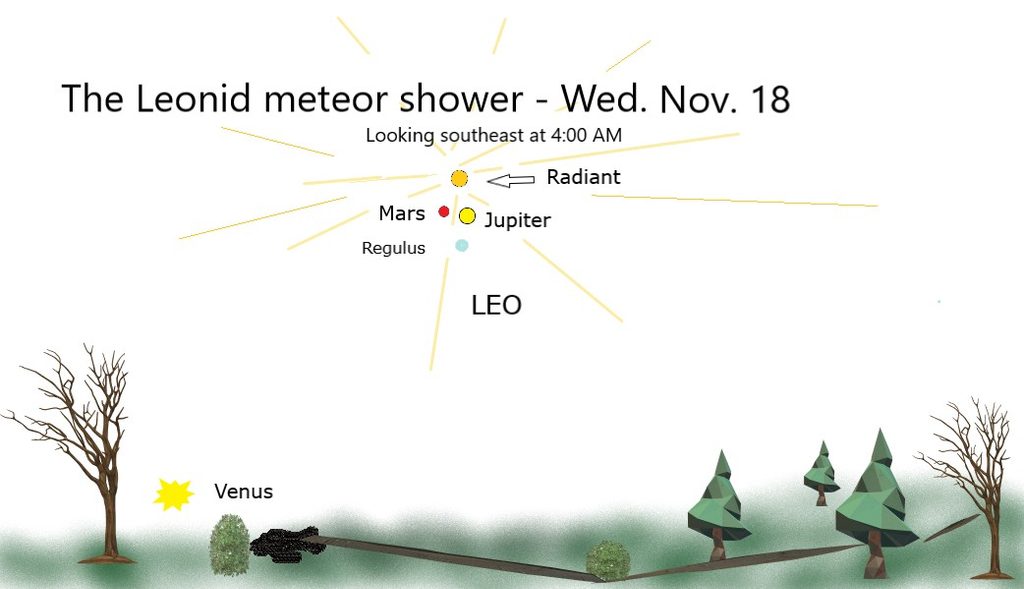
November hosts the Leonid meteor shower. Some meteors can be seen between November 6-30, with the peak on the night of November 17/18 (Tues/Wed). The Moon will set about midnight further darkening the sky at the time that’s best for observing which is in the very early morning hours of Wednesday, the 18th. They’ll appear to originate from the constellation Leo the lion which will be in the southeast, but you can spot them in any direction.
This meteor shower occurs when Earth passes through the stream of debris left behind by Comet 55P/Tempel-Tuttle. As these tiny fragments burn up when they enter Earth’s atmosphere at an amazing 44 miles per second, they create bright streaks of light, some with long trails.
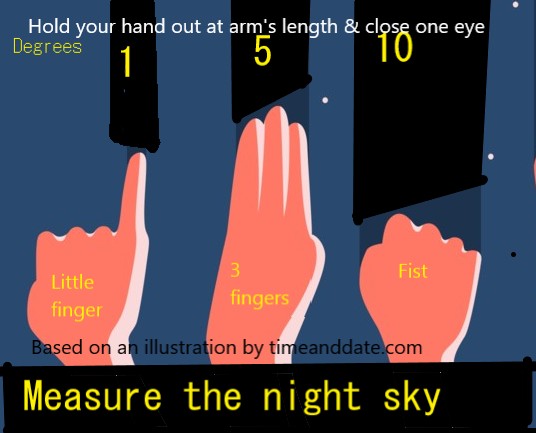
The planet Saturn, which can be seen naked eye, will be in the east at magnitude +0.5 as the sky darkens in the evening. It will be 50° high by 9:00 P.M. On Friday, November 20, Saturn will be 6° south of the Moon.
The red planet Mars rises in the east soon after midnight on the 1st of the month. Jupiter, the largest planet in our solar system, follows 30 minutes later. Before dawn, they will both be high in the south. On Sunday the 15th, Mars at magnitude +0.8 will be 1.2° due north of Jupiter, which will be much brighter at magnitude -2.0.
November offers more hours of darkness for observing the beauty of the night sky.